Details
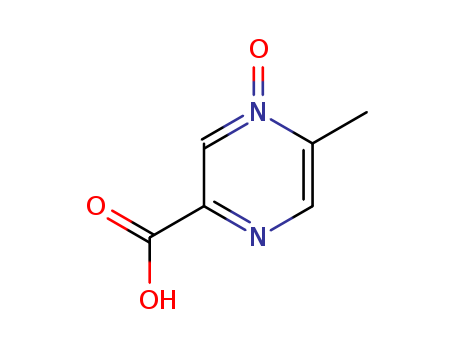
Offer Chemical Raw Material Acipimox 51037-30-0 In Stock
- Molecular Formula: C6H6N2O3
- Molecular Weight: 154.125
- Appearance/Colour: low yellow liquid or crystalline
- Vapor Pressure: 1.88E-12mmHg at 25°C
- Melting Point: 177-180 °C
- Refractive Index: 1.608
- Boiling Point: 539 °C at 760 mmHg
- PKA: 2.80±0.10(Predicted)
- Flash Point: 279.8 °C
- PSA: 75.65000
- Density: 1.44 g/cm3
- LogP: 0.51670
Acipimox(Cas 51037-30-0) Usage
|
Characteristics |
The advantages of acipimox to niacin are as follows:Longer duration of inhibition of hormone-sensitive lipase than niacin.A lower dose (250 mg BD or TDS) of acipimox is required to lower lipid levels and better tolerability with fewer side effects than niacin.Acipimox increases insulin sensitivity, while niacin causes insulin resistance. Thus, acipimox has a favorable role in patients with dyslipidemia and diabetes, whereas niacin is contraindicated in diabetes.Acipimox has adjuvant role in the management of PCOD and increases tissuesensitivity to GH, whereas niacin does not. |
|
Preparation |
Synthesis of acipimox: Under cooling and stirring, 78 g of maleic anhydride was dissolved in a solution of 60 ml of chloroform, and 40 ml of 30% hydrogen peroxide was added. After 2 h, 4.8 g of 5-Methyl-2-pyrazinecarboxylic acid was added, and the temperature was kept at 0-5 °C for 2 d. The maleic acid was filtered off. Concentrate to a small volume, add ethyl acetate, and filter to obtain 1.1 g of acipimox, the melting point of which is 178-180 °C. |
|
benefits |
1. Act on the liver and adipose tissue, inhibit the lipolysis of adipose tissue, thereby reducing plasma total cholesterol, triglyceride, low-density lipoprotein, and very low-density lipoprotein. 2. Increase high-density lipoprotein in plasma, which is beneficial to the transport and clearance of cholesterol. 3. Increase liver glycogen synthesis and lower blood sugar levels. Asimimox can be used as the first-choice lipid-lowering drug for the treatment of various hyperlipidemias, especially for those with diabetes mellitus with hyperlipidemia. |
|
Biological Activity |
Acipimox, also known as olbemox, is a nicotinic acid analog. It functions as an anti-lipolytic drug and vasodilator. Acipimox may be used in various metabolic studies involving insulin and ghrelin. It lowers total cholesterol and total triglycerides, which helps in the treatment of hyperlipidemia. |
|
Side effects |
Adverse effects include flushing (associated with Prostaglandin D2), rash, palpitations, and GI disturbances (nausea, dyspepsia, diarrhoea and upper abdominal pain) . Flushing can be reduced by taking aspirin 20-30 min before taking Acipimox. High doses can cause disorders of liver function, impair glucose tolerance and precipitate gout. |
|
Drug interactions |
Potentially hazardous interactions with other drugs. It can be combined with powerful hypolipidemic drugs such as fenofibrate and lovastatin to enhance the efficacy and reduce the dose and side effects of the drug. Acyclolimus can improve the efficacy of hypoglycemic drugs, so it is necessary to reduce the dose of hypoglycemic drugs and adjust the dose according to the patient's blood sugar. In antioxidant therapy, it can be used in combination with probucol. |
|
Metabolism |
Acipimox is not significantly metabolised and is eliminated almost completely intact by the urinary route. |
|
Mode of action |
Acipimox is a nicotinic acid derivative (methyl-pyrazine-carboxylic-acid-oxide) that acts on the niacin receptor (GPR109A).The mechanism of action is similar to niacin (inhibition of hormone-sensitive lipase). However,the inhibition of hormone-sensitive lipase by acipimox is remarkably longer (9-12 h) than that of niacin (3 h). Similar to niacin, acipimox also lowers the levels of lp(a). |
|
Brand name |
OLBETAM |
InChI:InChI=1/C6H6N2O3/c1-4-2-7-5(6(9)10)3-8(4)11/h2-3H,1H3,(H,9,10)
51037-30-0 Relevant articles
Methylpyrazine derivative arginine hydrate
-
Paragraph 0084-0085, (2021/05/15)
The invention belongs to the technical f...
1-2 - di (4 - pyridyl) ethane - acyclomox eutectic
-
Paragraph 0060-0061, (2021/10/13)
Provided are a 1,2-bis(4-pyridyl)ethane-...
Acipimox urea eutectic crystal
-
Paragraph 0071-0073, (2021/07/17)
The invention belongs to the technical f...
4,4'-dipyridylmethylpyrazine derivative eutectic crystal
-
Paragraph 0065-0078, (2020/09/09)
The invention belongs to the technical f...
51037-30-0 Process route
-
-
5521-60-8
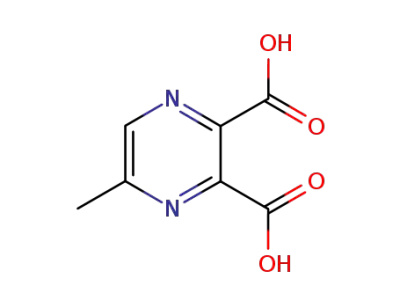
5-methyl-pyrazine-2,3-dicarboxylic acid

-
-
51037-30-0
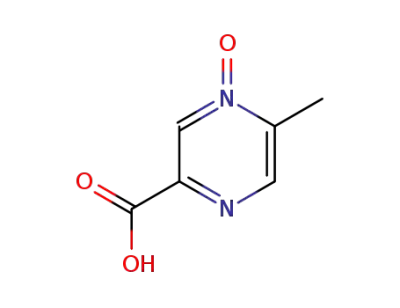
acipimox
| Conditions | Yield |
|---|---|
|
5-methyl-pyrazine-2,3-dicarboxylic acid;
With
sulfuric acid;
at 60 ℃;
for 1h;
With
sodium tungstate (VI) dihydrate; dihydrogen peroxide;
In
water;
for 8h;
Reagent/catalyst;
Temperature;
|
92%
|
|
5-methyl-pyrazine-2,3-dicarboxylic acid;
With
sulfuric acid;
at 60 ℃;
for 1h;
pH=1.5;
Large scale;
With
sodium tungstate (VI) dihydrate; dihydrogen peroxide;
In
water;
for 8h;
Temperature;
Heating;
Large scale;
|
88.6%
|
|
5-methyl-pyrazine-2,3-dicarboxylic acid;
With
sulfuric acid;
In
water;
at 60 ℃;
for 1h;
pH=9;
In
water;
at 60 ℃;
for 8h;
|
84.7%
|
|
5-methyl-pyrazine-2,3-dicarboxylic acid;
With
sulfuric acid;
at 60 ℃;
for 1h;
With
sodium tungstate (VI) dihydrate; dihydrogen peroxide;
In
water;
for 8h;
Reagent/catalyst;
Temperature;
Heating;
|
77.3%
|
|
5-methyl-pyrazine-2,3-dicarboxylic acid;
With
sulfuric acid;
at 60 ℃;
for 1h;
Large scale;
With
sodium tungstate (VI) dihydrate; dihydrogen peroxide;
In
water;
for 8h;
Large scale;
|
77.3%
|
|
5-methyl-pyrazine-2,3-dicarboxylic acid;
With
sulfuric acid;
at 60 ℃;
for 1h;
With
sodium tungstate (VI) dihydrate; dihydrogen peroxide;
In
water;
for 8h;
Heating;
|
77.3%
|
-
-
5521-55-1
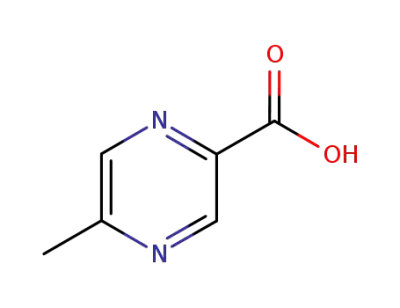
2-methylpyrazin-5-carboxylic acid
-
-
51037-30-0
acipimox
| Conditions | Yield |
|---|---|
|
2-methylpyrazin-5-carboxylic acid;
With
hydrogenchloride;
In
water;
for 0.5h;
With
peracetic acid;
In
water;
at 20 ℃;
for 3h;
Reagent/catalyst;
Temperature;
|
98.5%
|
|
With
sodium tungstate; dihydrogen peroxide; sodium hydroxide;
In
water;
at 45 ℃;
for 12h;
pH=9;
Concentration;
pH-value;
Reagent/catalyst;
Temperature;
|
94.5%
|
|
2-methylpyrazin-5-carboxylic acid;
With
sulfuric acid;
at 60 ℃;
for 1h;
Large scale;
With
disodium tungstate dihydrate; dihydrogen peroxide;
In
water;
for 8h;
Heating;
Large scale;
|
77.3%
|
|
With
sodium tungstate (VI) dihydrate; sulfuric acid; dihydrogen peroxide;
In
water;
at 70 ℃;
for 2.5h;
pH=1.5;
pH-value;
Temperature;
|
73%
|
|
With
disodium tungstate dihydrate; sulfuric acid; dihydrogen peroxide;
In
water;
at 70 ℃;
for 2.5h;
pH=1.5;
|
73.01%
|
51037-30-0 Upstream products
-
51037-25-3
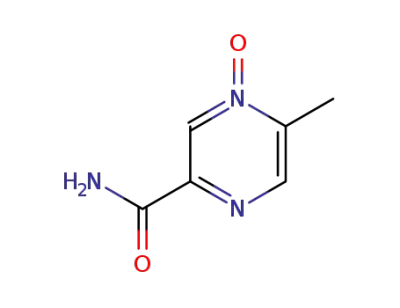
5-methyl-pyrazin-2-carboxamide-4-oxide
-
5521-57-3
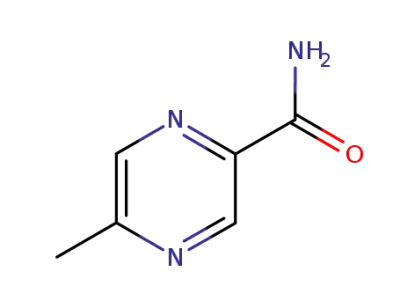
5‐methylpyrazine-2-carboxamide
-
5521-55-1
2-methylpyrazin-5-carboxylic acid
-
7722-84-1
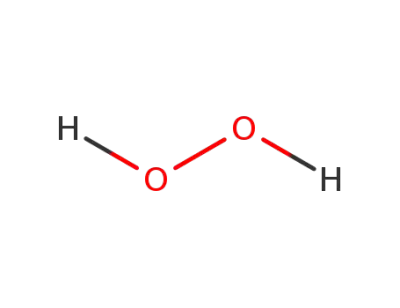
dihydrogen peroxide
51037-30-0 Downstream products
-
113795-27-0
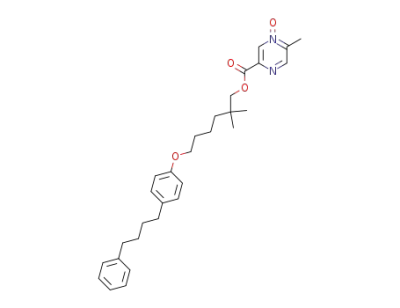
5-Methyl-4-oxy-pyrazine-2-carboxylic acid 2,2-dimethyl-6-[4-(4-phenyl-butyl)-phenoxy]-hexyl ester
-
83056-59-1
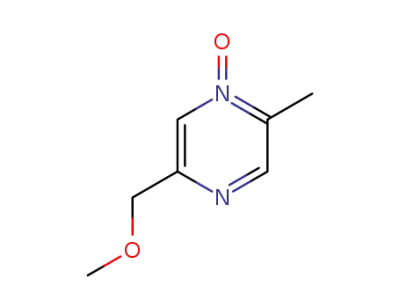
2-methoxymethyl-5-methylpyrazine-4-oxide
Related Products
-
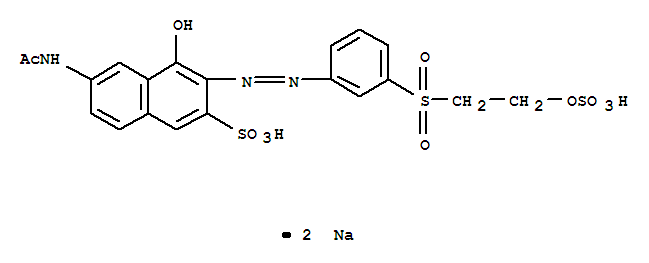 REACTIVE ORANGE 16
CAS:12225-83-1
-

-
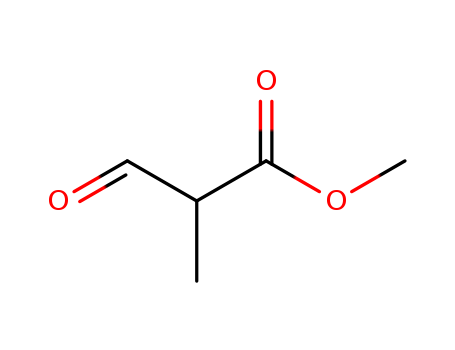 methyl 3-oxoisobutyrate
CAS:51673-64-4